
Chapter 13
Gloves, Cues & Table Gear
What the pros carry, what each discipline needs, and what is just noise.
8 min
Gloves, chalk and tip tools
Most missed shots blamed on talent are equipment neglect: a dry hand on humid cloth, a glazed tip, or chalk that never reached the leather.
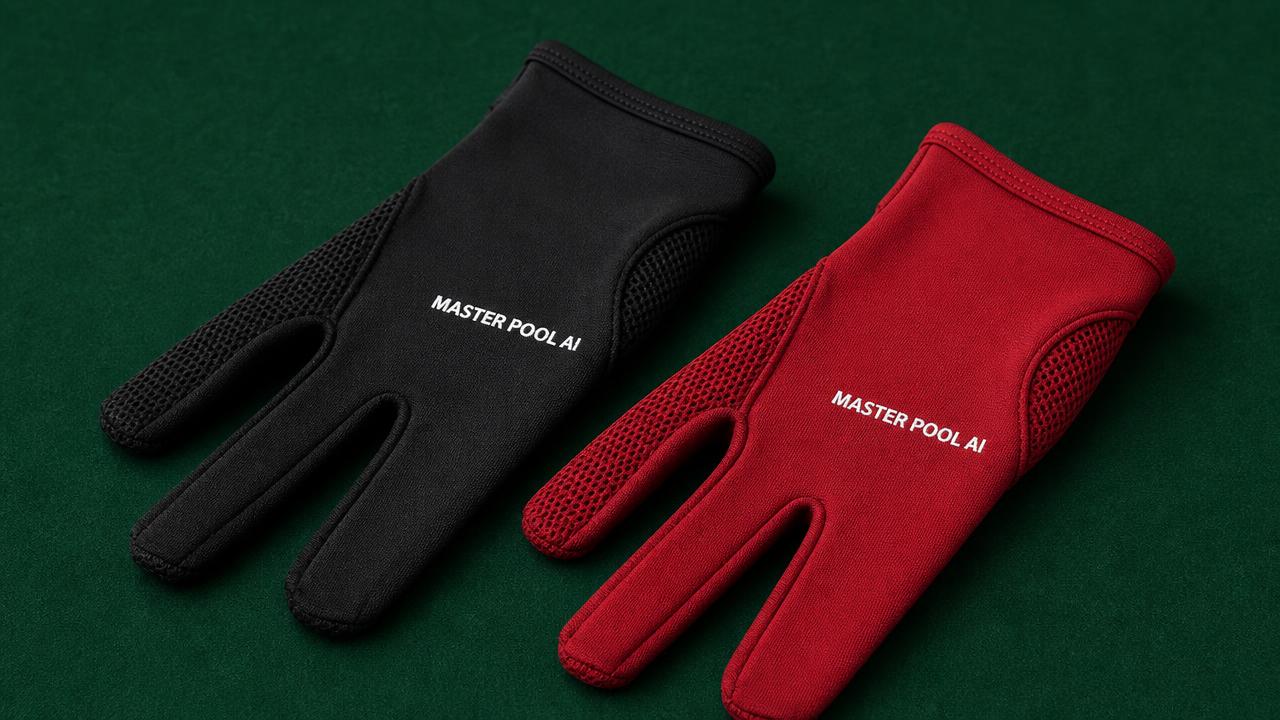
The glove
- Worn on the bridge hand; the cue slides on fabric instead of skin and sweat.
- Standard in humid climates and in Asian tournament play; entirely legal everywhere.
- Alternative: hand talc or a cue-shaft wipe. Never oil the shaft.
- Snooker players usually go bare-handed and keep a cloth to dry the shaft instead.
Chalk and tips
- Chalk — brush it on, do not screw the cube. Cover the whole tip before every spin shot.
- Shaper — keeps a dime or nickel radius so the tip can grip off centre.
- Tapper/pick — roughens a glazed tip so chalk holds; use sparingly.
- Burnisher — seals the sides so the tip does not mushroom.
- Hardness — soft grips more spin and dies faster; hard lasts and suits break cues.
A tip that has gone shiny is the single most common cause of unexplained miscues. Look at it: if it reflects light, it needs work.
8 min
Cues for each discipline
Different games move different balls on different cloth, so the cue changes with them. You do not need three cues to start — but you should know why they exist.
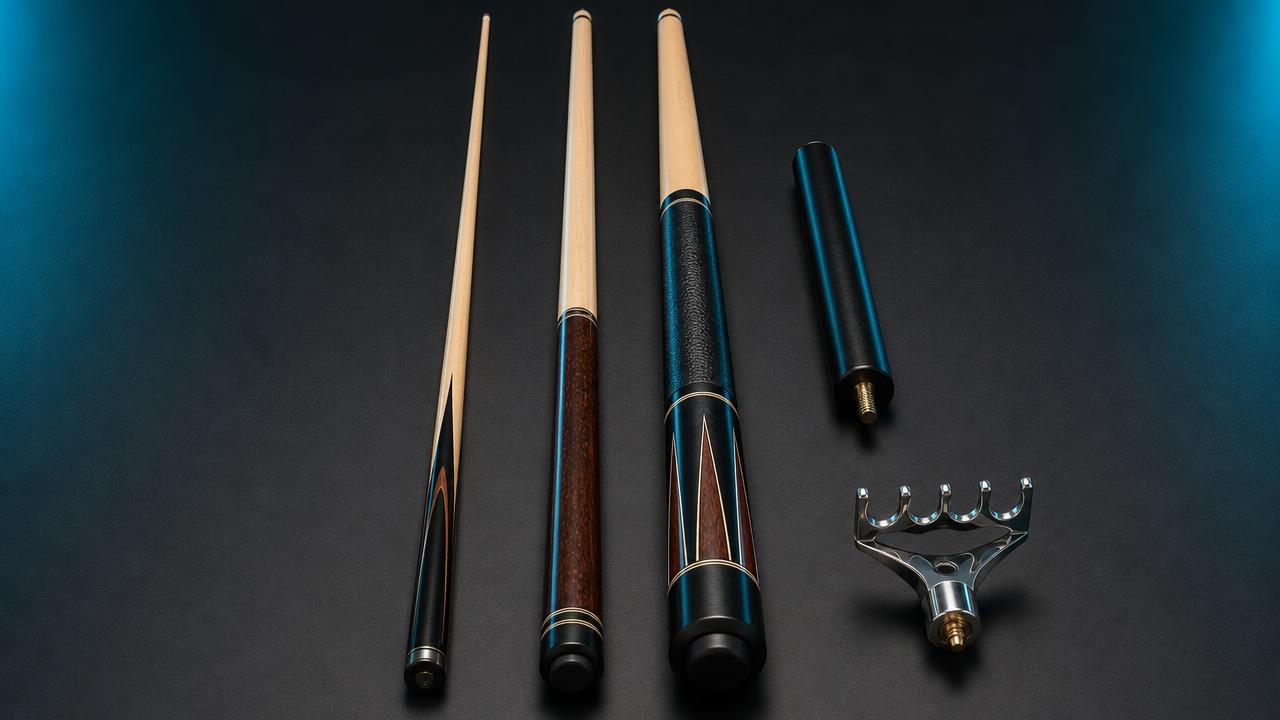
- Snooker / English pool — 9–10 mm tip, 480–540 g, thin shaft for fine contact on 52.5 mm balls and heavy napped cloth.
- American pool (8/9/10-ball) — 12.5–13 mm tip, 540–570 g, stiffer shaft to move 57.2 mm balls with authority. Low-deflection shafts reduce squirt on spin shots.
- Break cue — hard tip, 570–620 g, built to survive full-power hits and spare your playing tip.
- Jump cue — short and light, phenolic tip; legal in most pool rules, banned in snooker and blackball.
- Carom — short, thick, no pockets to worry about: all about controlled cue-ball spin.
Fit and care
- Length: standard 147 cm; use an extension rather than a cue that is too long.
- Roll it on the table — a warped shaft is a permanent aiming error.
- Store vertically, away from radiators and car boots; wood moves with heat and damp.
- Wipe the shaft after every session; clean wood slides, sticky wood steers.
8 min
Table accessories and upkeep
The table is equipment too. Half of what feels like bad luck is a dirty cloth, a bad rack, or three millimetres of tilt nobody measured.
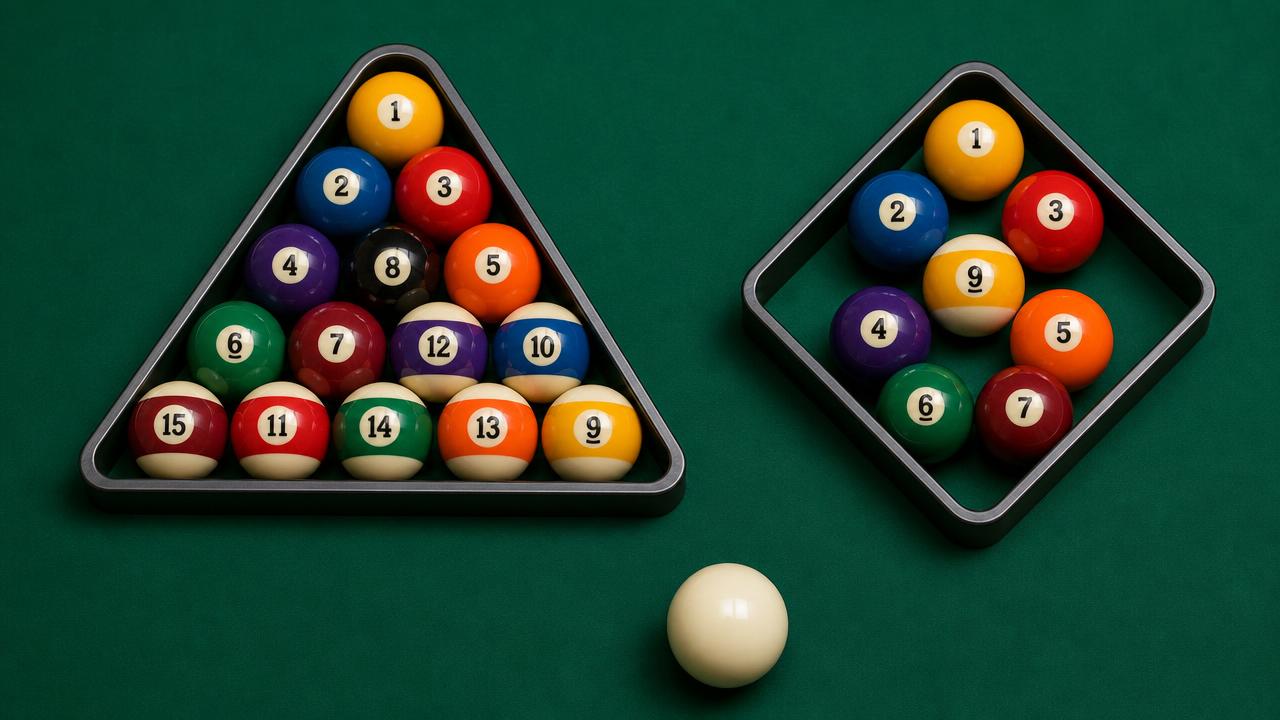
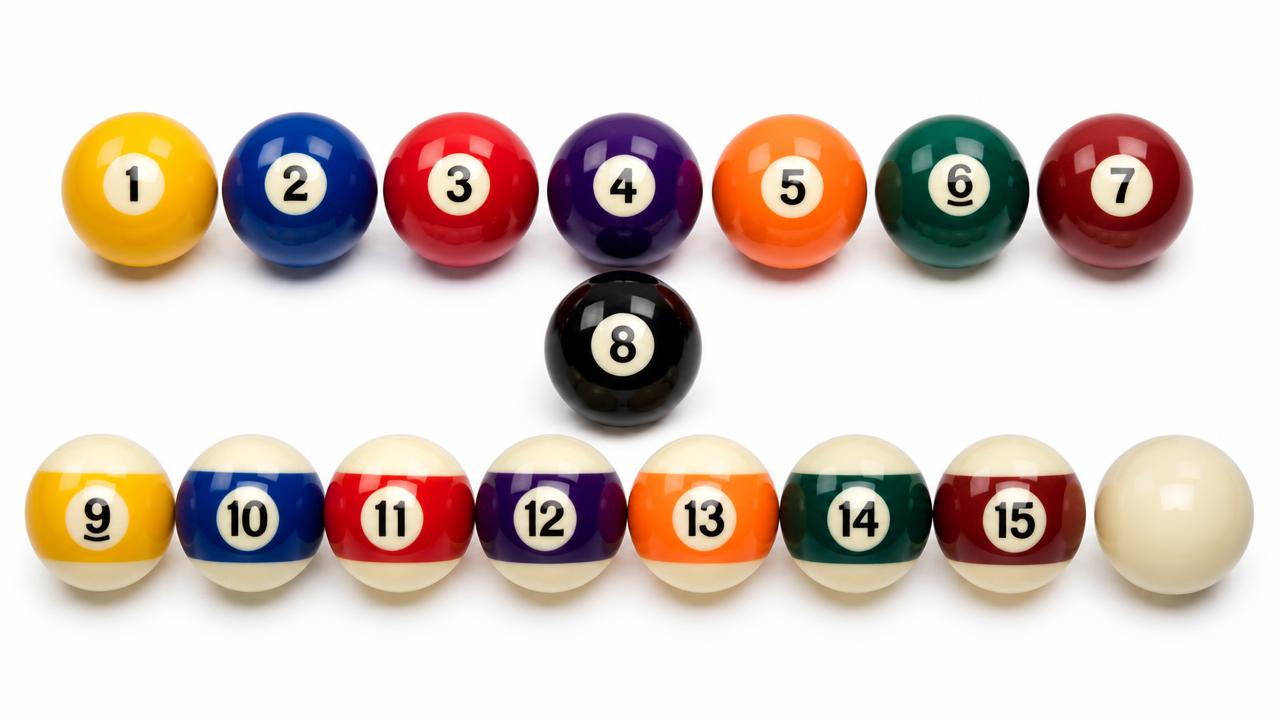
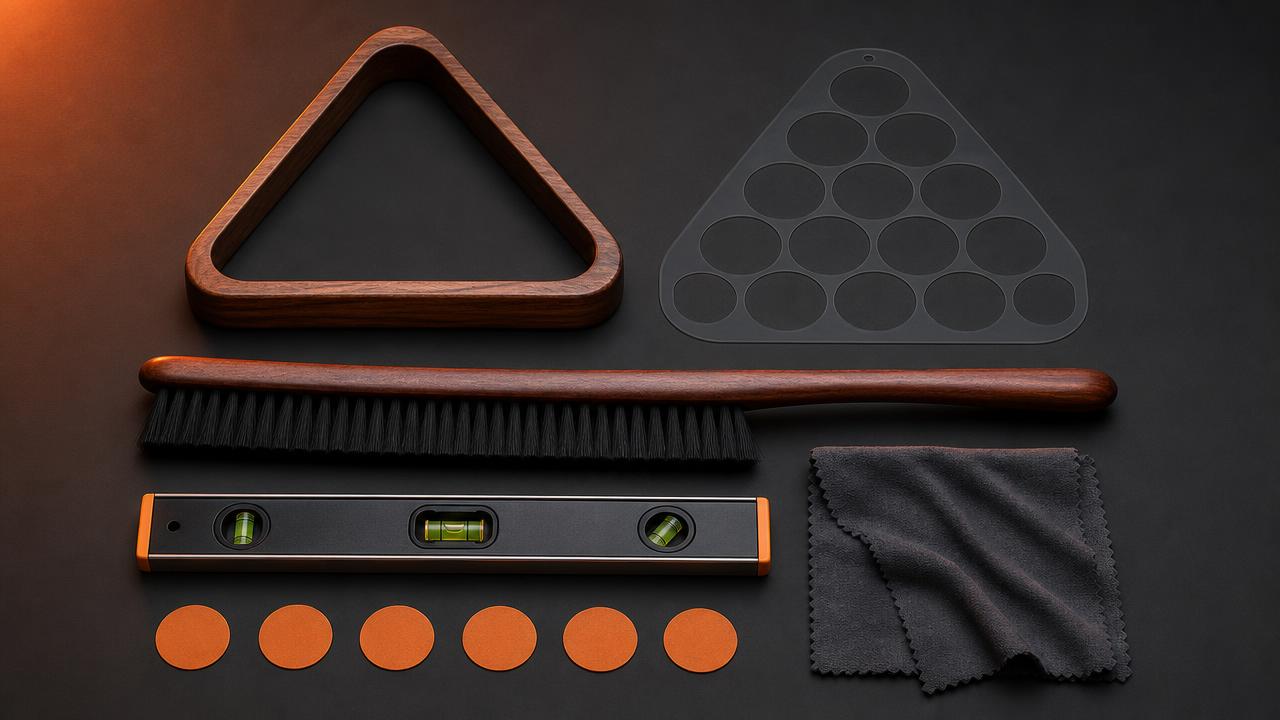
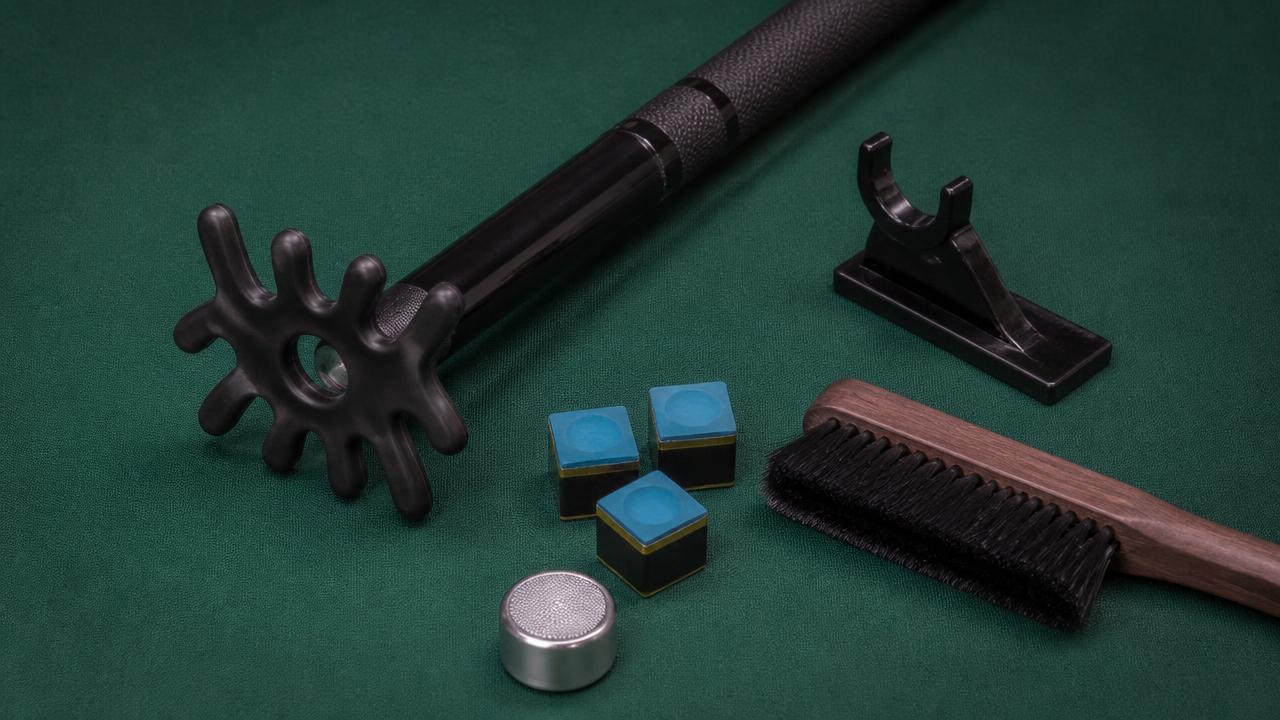
- Triangle / diamond rack — the standard for 8-ball and 9-ball respectively.
- Template rack — a thin sheet that guarantees a frozen rack; now normal in rotation tournaments.
- Brush — always rail-to-rail in one direction, then along the rails.
- Iron — for napped snooker and blackball cloth only; never on worsted pool cloth.
- Level — check both diagonals; 1 mm of tilt across two metres visibly curves slow rolls.
- Spots — foot spot, head spot and the black spot must be marked to play by the book.
- Ball polisher and cloth — clean balls throw less and skid less on cut shots.
- Extras — mechanical rest, spider rest (snooker), ball tray, cue rack, table cover.
Discipline differences
- Blackball / English pool — napped cloth, 2-inch balls, rests always at hand.
- Snooker — spider and swan rests, extensions, marked spots for six colours.
- American pool — worsted cloth, template racks, jump and break cues.
- Home tables — a cover and a level do more for your game than any gadget.