
Chapter 12
Famous Break Shots
The openings the champions built, and how to copy them.
The soft break — Efren "Bata" Reyes
Efren Reyes, "The Magician", proved that the break is a positional shot, not a demolition. Against a tight rack he takes speed off, keeps the cue ball on the table and accepts a controlled spread he can read — because a rack he understands is worth more than a rack he scattered.
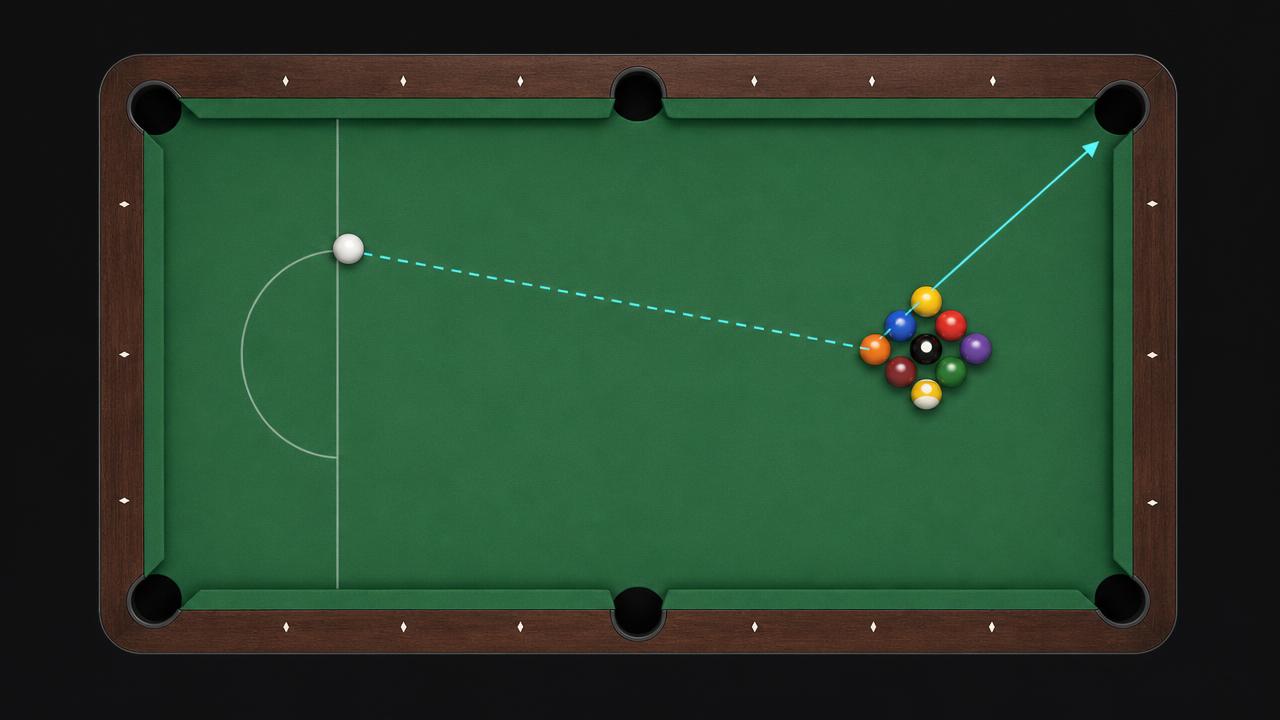
The details
- Position — one to two ball widths off centre on the head string, near the side rail on tight cloth.
- Contact — as full as possible on the head ball; a thin hit kills the wing ball.
- Speed — 50–65% of your maximum. You want a legal spread, not a firework.
- Tip — centre to a fraction below centre so the cue ball stops near the middle of the table.
- Aim of the shot — pot the wing ball, keep the cue ball in the middle, leave the one visible.
Reyes's real weapon is what comes next: he breaks with the intention of playing safe if the layout is ugly. Train the soft break by racking ten times and scoring yourself only on whether you can see a shot afterwards.
The power break — Strickland and the smash
Earl Strickland's break made 9-ball a spectacle: full power from the centre of the head string, everything moving, and enough of them going in that the game was over before it started. On loose cloth with a slightly gapped rack, raw speed still wins.
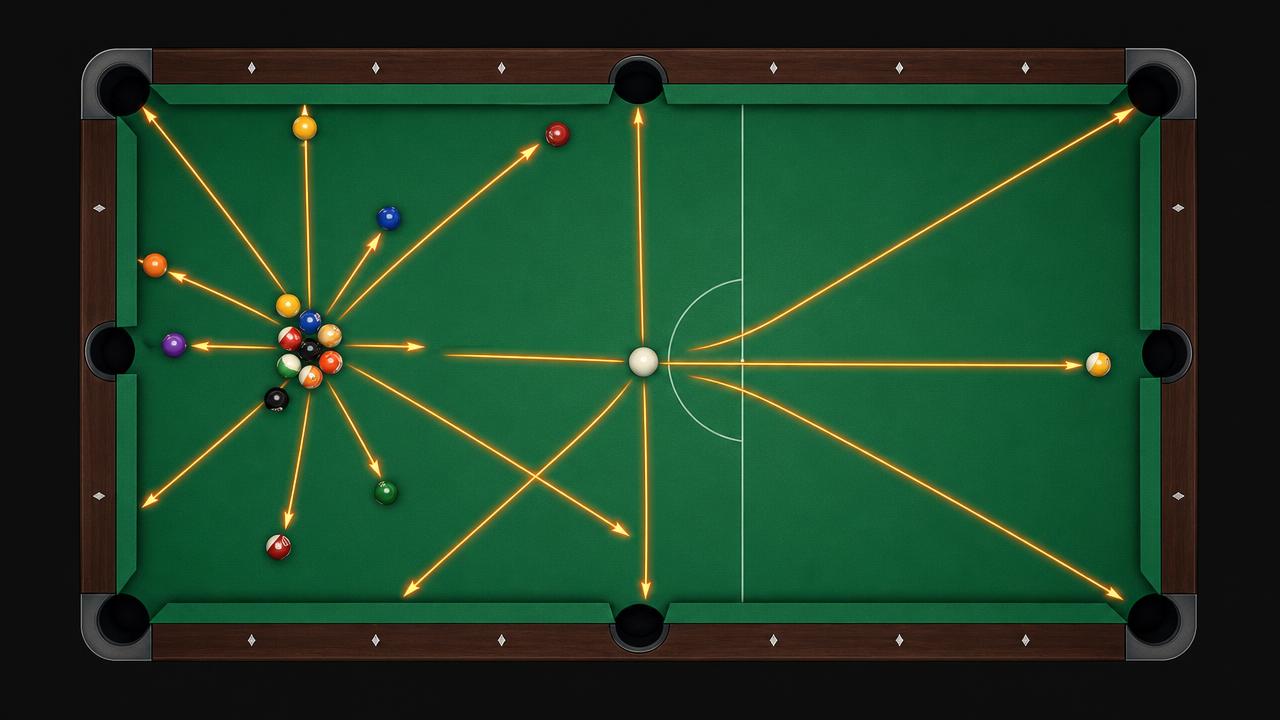
How power is actually generated
- Widen the stance and stand slightly taller; the shot needs body rotation, not a bigger grip.
- Bridge long (30–35 cm), closed loop, cue as level as the rail allows.
- Slow, long backswing with a distinct pause — rushing the backswing costs accuracy and speed.
- Accelerate through the ball and let the hips turn; the tip finishes well past the address point.
- Centre ball. Any side spin at this speed throws the cue ball into a pocket or a rail dance.
Accuracy beats violence: a 90% speed break with a full hit on the head ball transfers more energy than a 100% swing that clips it. Record yourself — if the cue ball hops or curves, drop 10% speed until it rolls dead straight.
The 8-ball second-ball break
In 8-ball a smashed rack is often a lost rack: clusters everywhere and no pattern. The professional answer is the second-ball break from near the side rail — hit the ball behind the apex, spread the rack sideways, and keep the cue ball in the centre.
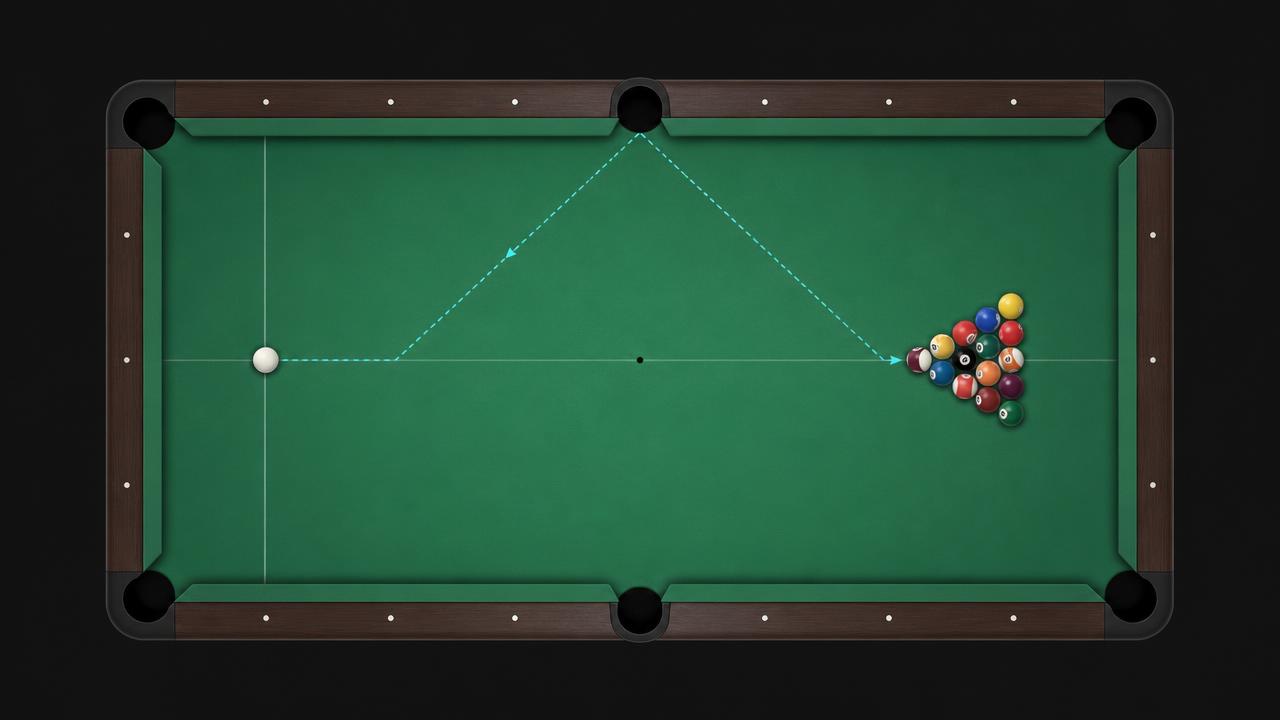
The recipe
- Position — cue ball on the head string, one ball off the side rail.
- Target — the second ball of the rack, hit nearly full.
- Tip — a touch of draw and, on many tables, a hair of inside spin to hold the cue ball off the rail.
- Speed — 70–80%. Enough to drive four balls to rails; not enough to make a cluster festival.
- Goal — one ball down, cue ball centre table, both groups readable.
After the break, count clusters before you choose a group. A break that leaves you with five open balls of the "wrong" colour is a better break than seven of the right colour locked on a rail.
The cut break — 10-ball and rotation games
With template racks and 10-ball rules, modern rotation players use the cut break: from the very edge of the head string, clip the head ball thinly, send the corner ball toward a pocket and park the cue ball with a rail. Shane Van Boening built a career on this kind of controlled opening.
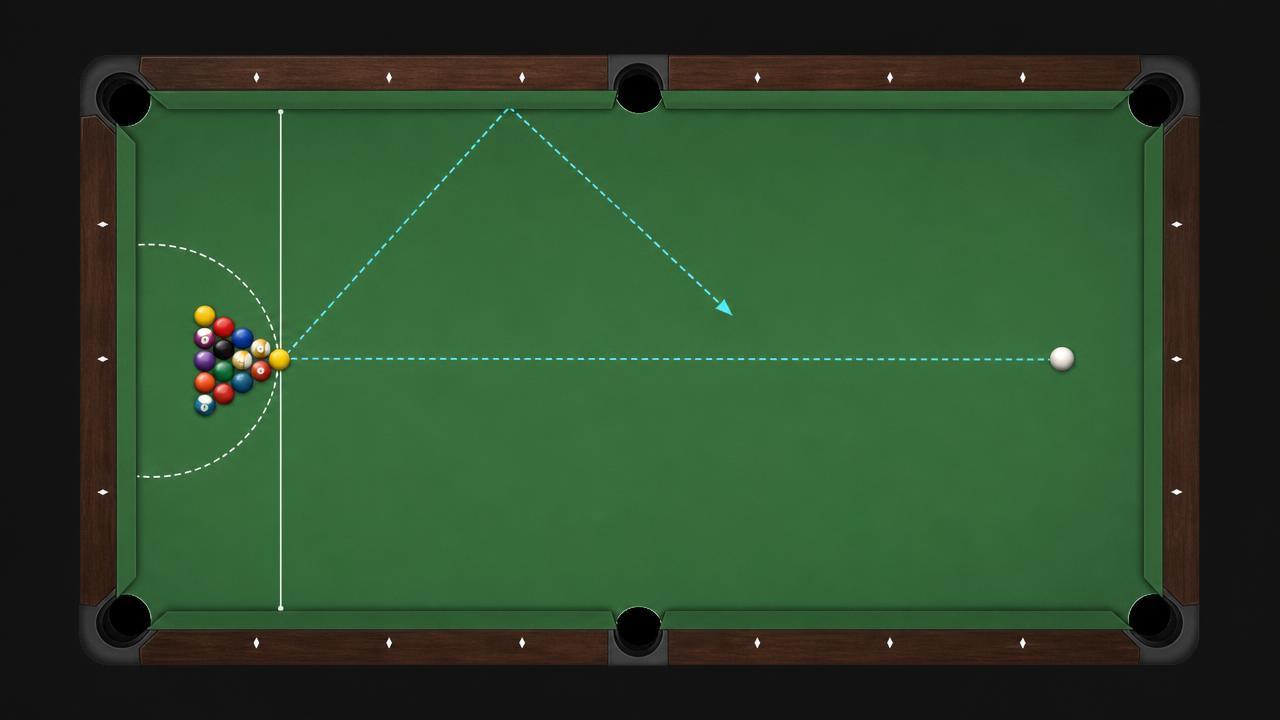
Why thin works
- Less energy into the rack means fewer balls near pockets on a foul-prone layout.
- The cue ball keeps a known path — off the side rail and back toward the centre.
- Corner-ball pots become repeatable, which is the whole point of a break routine.
- In 10-ball, where called shots punish luck, control is worth more than volume.
Break routines are equipment-specific. Whatever break you adopt, hit the same rack twenty times and write down what happened: pot rate, cue-ball landing spot, fouls. The break is the only shot in pool you can practise identically forever — treat it like a golf swing, not like a fight.